


17th July 2025
Why Keyword Research Matters for Ecommerce SEO Success
Ecommerce SEO performance depends on several connected elements, but keyword research underpins them all. Without a clear understanding of how customers search, visibility remains limited and effort is often misdirected.
Keyword research informs not just ecommerce SEO, but paid search and content strategy as well. It defines where demand exists and which opportunities are worth pursuing.
This article explains why keyword research is important for ecommerce, how it supports commercial performance and how to approach it in a way that delivers measurable impact.
Table of contents
What is keyword research?
Keyword research is the process of identifying and analysing the search terms people use when looking for products online. It reveals demand, clarifies intent and informs how pages should be structured and prioritised.
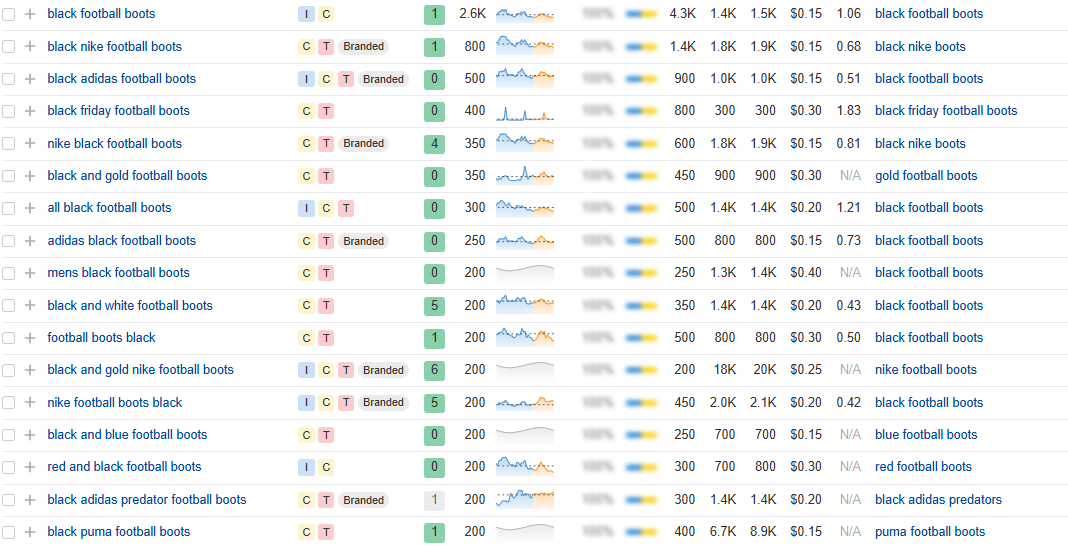
For example, a search for “black football boots” shows clear purchase intent. That insight guides how product pages, category pages and supporting content are built, helping the site meet user expectations and compete more effectively in search results.
Keyword research tools support this process by providing data on search volume, competition and variations in phrasing. Commonly used platforms include Google Keyword Planner, Ahrefs and Semrush.
The example below from Ahrefs shows long tail keyword variations, ordered by search volume:
What are the benefits of ecommerce keyword research?
| Benefit | Explanation |
|---|---|
| Targets intent and demand |
|
| Informs site structure and navigation |
|
| Improves product page visibility |
|
| Supports content strategy |
|
Which keyword types matter for ecommerce SEO?
An ecommerce website should target a mix of keyword types. Each serves a different role in the customer journey, from early research to purchase. Focusing on only one limits reach and efficiency.
Transactional keywords
Transactional keywords signal strong buying intent. Customers searching these terms are typically ready to convert, which makes them high priority for revenue-driving pages. Examples include:
- “cheap wireless headphones”
- “order organic skincare products online”
- “iphone for sale”
These keywords are most effective on product pages, category pages and when used as part of paid search campaigns.
Informational keywords
Informational keywords reflect research-stage behaviour. Users are exploring options, comparing products or solving a problem. While intent is lower, these queries are important for building trust and capturing demand early. Examples include:
- “best running shoes for marathon runners”
- “how to clean a leather jacket”
- “what is the best gaming console”
These terms are best targeted through blog content, FAQs and buying guides.
Navigational keywords
Navigational keywords are used when users already know the brand or retailer they want. Performance here depends on brand visibility and site structure. Examples include:
- “apple official store”
- “sainsbury’s online shopping”
- “adidas official store”
These searches typically land on brand, category or homepage URLs.
Long tail keywords
Long tail keywords are more specific and typically reflect clearer purchase intent. While search volume is lower, competition is often reduced and traffic quality is higher, which makes them efficient targets for ecommerce SEO.
Examples include:
- “black waterproof trail running shoes”
- “32 inch wall mounted bathroom mirror”
- “organic dog food for sensitive stomachs”
These terms work best on product and category pages where specificity supports relevance, rankings and conversion.
Common ecommerce keyword mistakes to avoid
Even with good tools, keyword research often fails because fundamentals are missed. These issues reduce traffic quality, waste effort and limit conversions. Some common mistakes to avoid include:
Ignoring search intent: Search terms do not all mean the same thing. A query such as “best phone under £1000” signals comparison and evaluation, not a ready-to-buy user. When content does not match intent, engagement drops and bounce rates rise. Rankings alone will not fix that. Always start by asking what the user expects to see and whether the page delivers it.
Focusing only on high volume keywords: High volume terms are usually competitive and often drive traffic that does not convert. A more effective approach mixes higher volume terms with lower volume, higher intent keywords. This improves relevance and typically delivers stronger commercial performance.
Letting keyword strategies go stale: Search behaviour changes, products fall out of demand and new terms emerge. Content should reflect current demand, not outdated searches or past campaigns.
How to carry out keyword research for ecommerce websites
Keyword research only works when it is structured and focused. Without a clear process, it is easy to chase volume, target the wrong intent or invest time in terms that will not deliver return.
The steps below outline a practical approach to keyword research for ecommerce websites.
1. Define your products and audience
You should always start by understanding what you sell, who you sell to and why customers choose you. This keeps keyword research focused and avoids wasted effort. This means considering core product categories, customer needs, pain points and genuine differentiators (like price, range, location or fulfilment).
2. Use keyword research tools
Keyword tools provide data on search volume, competition and intent. Use them to validate demand, not to generate long lists with no prioritisation.
Commonly used tools include Google Keyword Planner, Ahrefs and Semrush. Some platforms also surface alternative keyword ideas using automated suggestions.
These suggestions help expand your keyword set beyond initial terms. They highlight variations, related queries and long tail keywords that reflect how people actually search. This allows you to build out more complete keyword groups, uncover lower competition opportunities and capture different types of intent without relying on guesswork.
3. Assess competition and intent
Search volume alone is not enough. Evaluate how competitive a term is and whether it matches the stage of the buying journey. This part of the process basically involves asking two questions:
- Can you realistically compete for the term?
- Does it attract users ready to convert?
4. Group keywords by purpose
Grouping keywords keeps strategy aligned to site structure and content goals. Common groupings include product type, search intent and funnel stage. At this point, assign a primary keyword and supporting terms to each page.
5. Apply keywords properly
Keyword value is realised at implementation. Pages should use keywords naturally and consistently, without forcing placement.
Apply them across product titles, descriptions, metadata (like page title tags and meta descriptions ), category pages, internal links and image alt text.
6. Monitor performance and refine
Once pages are live, track performance using tools such as Google Search Console and analytics platforms. Measure rankings, traffic quality and conversions.
Use this data to refine priorities, remove underperforming keywords and double down on what delivers return.
Keyword research sets the direction for ecommerce SEO. When it is done well, it removes guesswork and ensures time is spent on opportunities that can actually drive growth.

Klaudia Majewska
Klaudia Majewska is an SEO Account Manager responsible for planning, executing and reporting on SEO campaigns across a range of clients. Her work focuses on turning strategy into consistent, measurable performance through clear priorities and ongoing optimisation. Klaudia has a strong technical SEO background and works closely with emerging AI-led search formats. She specialises in making sure products and services are structured and presented in ways that perform across both traditional search results and newer AI-driven search experiences.
Are you targeting the right keywords?
Focus your SEO efforts on the searches most likely to drive sales.
Keyword research helps you understand how customers actually search for your products, which pages they expect to find and where the best opportunities sit. Our SEO team builds ecommerce keyword strategies around real demand and buying intent, helping you improve product visibility, create better category pages and bring in traffic that is more likely to convert.
Improve Your Ecommerce SEO