



16th January 2026
How to Plan a Website: A Guide to Website Planning
Website projects fail for predictable reasons. Poor planning leads to unclear scope, delayed decisions and unnecessary work. Without structure, time and budget are quickly used up by fixing problems that should have been resolved before development work begins.
Effective website planning is about control. It reduces risk, sets clear priorities and ensures effort is spent where it delivers value. Decisions made early shape cost, timelines and performance long after launch. When those decisions are rushed or undocumented, this leads to inefficiency.
This guide explains how to plan a website in a way that supports commercial goals, avoids wasted effort and creates a clear path from discovery through to delivery. Well-structured website planning makes each stage of the project easier to manage and faster to deliver.
The importance of the website discovery phase
Website discovery is where most projects either gain control or lose it. Decisions made at this stage define scope, cost and delivery speed. When discovery is handled properly, the rest of the project becomes much more easy to manage. When it is rushed or vague, problems emerge later when they are far more expensive to fix.
A productive discovery phase should result in clear, usable outputs:
- Clearly defined business goals
- Agreed priorities and constraints
- An understanding of user and customer needs
- A realistic view of what can be delivered within time and budget
In practice, discovery is where problems are resolved cheaply. Once web development begins, every unresolved question slows progress. Treating discovery as a structured decision-making phase, rather than a formality, is what separates efficient website projects from costly ones.
Define business objectives and success criteria
Website planning must start with clear business objectives. Without them, design and content decisions become subjective and difficult to prioritise. Even small websites exist to support measurable outcomes, whether that is generating leads or driving sales.
Objectives should be defined in practical terms. For example, increasing qualified enquiries, improving conversion rates or reducing friction in key user journeys. These outcomes set success criteria and provide a clear reference point for decision-making throughout the project.
Once objectives are clear, they should directly shape how the website is structured, designed and developed. User flows need to support the actions that matter most, content should address the questions that block conversion and the user experience should make key tasks easy to complete. When business goals guide these decisions, the website functions as a commercial tool rather than a static brochure.
Understand your audience and user behaviour
Effective website planning depends on understanding who the site is for and how those users behave. Assumptions about what users want often lead to poor structure, unclear content and unnecessary friction.
Audience insight should be based on evidence wherever possible. This aligns with established usability research showing that design decisions grounded in observed user behaviour lead to better outcomes than assumption-led planning. This evidence might include:
- Analytics and usage data
- Search behaviour and intent
- Customer feedback and enquiries
- Performance data from an existing site
Understanding user behaviour informs concrete website planning decisions. It shapes page hierarchy, navigation, content depth and the placement of calls to action. When planning is guided by how users actually interact with a site, rather than how stakeholders expect them to, the resulting experience is better.
Set scope, constraints and priorities early
Clear scope and constraints are essential for controlling cost and delivery time. Without them, website projects expand unpredictably, decisions slow down and budgets are quickly eroded by unplanned work.
At this stage, you need to define what the website must include, what can be left until later and what is out of scope entirely. Budget and timeline should be agreed at the same time, not treated as secondary considerations. These constraints shape every subsequent decision, from functionality and content depth to design complexity.
Understanding the order in which work needs to happen is also important, as it allows teams to allocate time and resources effectively. When scope, priorities and constraints are set early, planning becomes more efficient and projects are far less likely to stall or overrun later on.
Agree roles, responsibilities and communication
Website projects slow down when ownership is unclear. Decisions take longer, feedback becomes inconsistent and progress stalls. Clear roles and responsibilities prevent this.
At the website planning stage, it should be agreed who is responsible for providing content, approving designs and making final decisions. Expectations around response times and sign-off processes also need to be set early to avoid delays later in the project.
Effective communication is practical, not constant. The goal is to share the right information at the right time, using agreed channels.
Plan website structure and content requirements
Planning site structure starts with defining how pages relate to each other and how users move through the site. This should be mapped before any visual design work begins. A clear sitemap or flowchart confirms page hierarchy, navigation paths and what content is needed.
Content requirements should be defined alongside structure. This includes identifying page types, required assets and the purpose of each page. Calls to action need to be planned as part of this process, not added later as an afterthought (which is all too common!).
Treating structure and content as planning outputs reduces uncertainty during design and build. With a defined sitemap and content inventory in place, teams work more efficiently and avoid delays caused by missing or unclear content later in the project.
Translate plans into wireframes
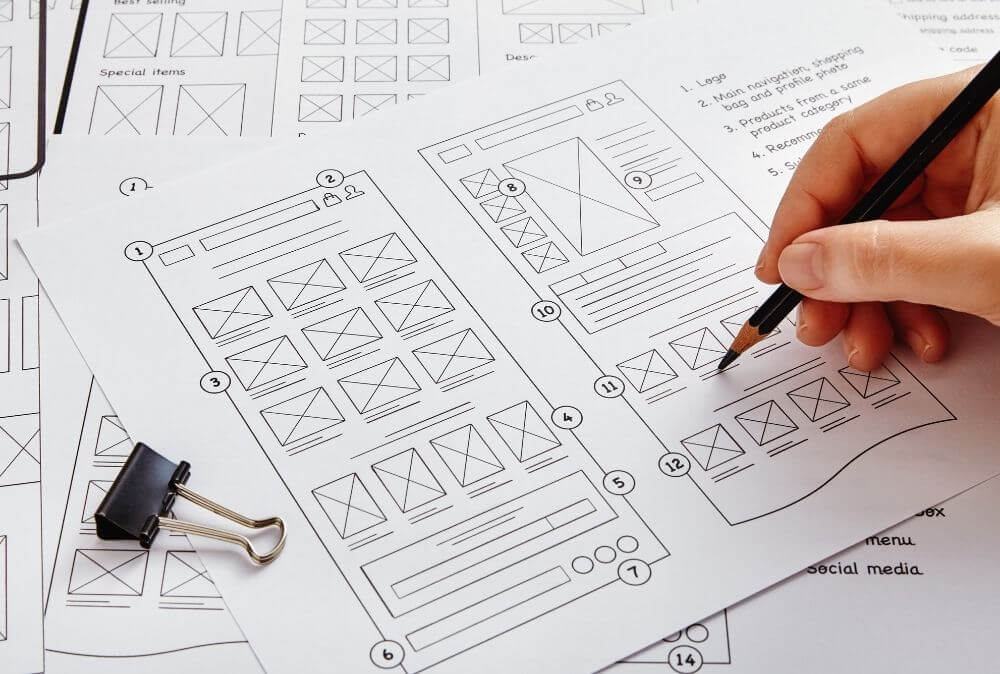
Wireframes bridge the gap between planning and visual design. They show how content, functionality and user flows come together without visual distraction. This allows teams to validate structure, priorities and usability before committing to detailed design work. A great tool for this, and the one we use, is Figma .

At this stage, design direction needs to prioritise consistency over looks. Clear rules around layout, typography and visual hierarchy reduce ambiguity and prevent subjective design decisions later on. A documented style guide is useful, even for small projects, as it provides a single reference point for how the site should look and behave.
Choose the right CMS and technical foundations
Choosing a content management system (CMS) is an operational decision, not a design preference. Platforms like WordPress are built specifically as content management systems, designed to support ongoing content creation, governance and day-to-day site management. The best CMS platform should support how your team works day to day and how the site will be managed over time.
A suitable CMS allows non-technical users to update content, publish new pages and maintain accuracy without relying on developers for more basic or routine changes.
Prepare for build, testing and launch
Before a website goes live, it must be tested against real use. This website QA testing stage exists to identify issues that could undermine performance, usability or reliability once users arrive.
Testing needs to cover core functionality, user journeys, content accuracy and technical stability. Where possible, involving a small group of representative users helps surface issues that internal teams may miss. Problems identified at this stage are far cheaper to fix than after launch.
Launch should only take place once the site meets agreed quality standards and ownership is clear. Readiness includes confirming deployment processes, backup arrangements and post-launch responsibilities. A controlled launch reduces risk and sets the foundation for stable ongoing operation.
Plan for ownership and maintenance
Website planning does not end at launch. Once the site is live, clear ownership is required to keep it accurate, secure and effective.
Website maintenance protects the investment made during build. This includes updating content, monitoring performance, applying technical updates and addressing issues as they arise. Without an agreed approach to ownership and upkeep, even well-built websites degrade over time. Planning for ongoing maintenance and improvement ensures the site continues to support commercial goals rather than becoming a static or outdated asset.
Common planning mistakes we see
Most issues encountered when planning a website are avoidable. In practice, the same problems appear repeatedly across projects, regardless of size or sector. The most common website planning mistakes we see include:
- Underinvesting in discovery, leaving key decisions unresolved
- Allowing scope to expand without revisiting priorities or budget
- Treating content as a late-stage task rather than a planning requirement
- Failing to define ownership, slowing decisions and approvals
Avoiding these mistakes is less about process and more about discipline. Clear decisions, agreed ownership and realistic planning consistently lead to smoother delivery and better outcomes.
Planning a website properly means thinking beyond launch and taking responsibility for long-term performance. If you want support bringing structure to that process, we can help . We work with businesses to plan and deliver websites that are commercially focused, efficient to build and designed to perform over time.

Rehan Khan
Rehan Khan is a Senior Project Manager with over 20 years’ experience delivering complex digital projects. His work focuses on defining clear project scope, managing risk and keeping multidisciplinary teams aligned. Rehan works closely with designers and developers to translate strategy into practical delivery, ensuring projects stay focused, efficient and well controlled from planning through to launch.
Planning a new website?
Start with a clear plan before design and development begin.
A successful website project needs more than a good idea and a nice design. We help businesses plan, design and build websites that are properly scoped, easy to manage and focused on real results, so the project runs smoothly from discovery through to launch.
Plan Your Website Project