


9th December 2025
How to Turn a Technical SEO Audit into Revenue for Ecommerce Businesses
Most ecommerce businesses don’t need larger, more complex SEO audits. What they really need is focus: a clear, actionable link between technical fixes and real business outcomes.
Typical SEO audits churn out a long list of “issues”. In some cases, the entire process is automated, as with site audits that can be set up in tools like Ahrefs and Semrush .
Some issues matter but plenty don’t. A page might be flagged as slow or missing structured data but, if it doesn’t impact how Google crawls, indexes or interprets your key commercial pages, it’s not a priority. SEO isn’t about chasing perfect scores; it’s about focusing on the fixes that drive real revenue. The key difference between an average audit and one that delivers real value is knowing what to tackle first, what can wait, and what actually impacts revenue.
At ALT Agency, our SEO audits are led by experienced specialists, backed by our in-house dev team, so the recommendations don’t just sit in a PDF; they get implemented.
This article walks through how we take technical SEO findings and turn them into a focused roadmap that improves visibility and grows revenue.
1. Improve crawlability
In order to rank at all, Google needs to reliably access your site. Since Googlebot assigns a limited crawl budget to every site , it can only spend so much time crawling your pages. If crawl budget’s being wasted, the rest of your ecommerce SEO efforts won’t matter.
A common misconception is that larger product catalogues need more complex ecommerce SEO audits. In reality, most crawlability issues stem from repeatable patterns (things like filters, parameters and endless URL variations), not the size of the site itself. Once those are under control, even the biggest ecommerce sites become much easier for Google to crawl and understand.
When conducting a technical SEO audit, here’s what we focus on fixing:
- Infinite URL variations from filters and parameters
- Duplicate category pages
- Internal 404s and redirect loops
- XML sitemaps listing URLs that shouldn’t exist
- Conflicting canonical tags
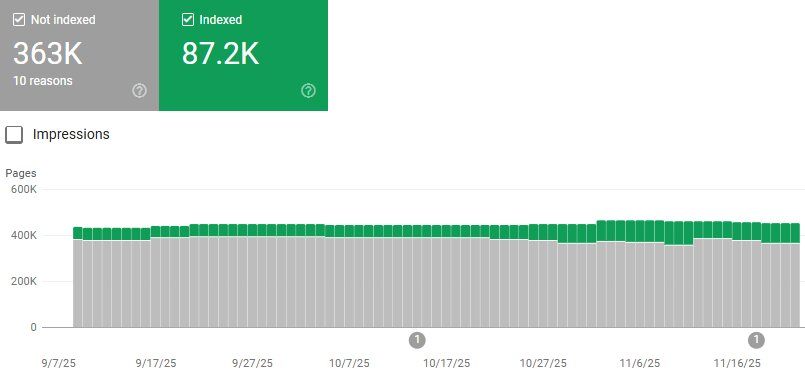
As Seobility explains , issues like infinite URL variations, duplicate content , parameter-driven pages, redirects and soft 404s all drain crawl budget . Once sorted, Google stops wasting time and starts indexing what actually matters: your product, category and landing pages. This, in turn, results in faster indexing of new products and categories, as well as improved performance across key pages.
2. Fix indexability
More indexed pages doesn’t mean more traffic. In fact, adding bloat to Google’s index can hurt performance. A good website audit helps separate high value pages from low value ones that are better off removed or blocked.
It’s not uncommon for a website to have far more pages indexed than it should. For example, this article about index bloat highlights a case where an ecommerce site consisting of around 10,000 pages actually had 38,000 pages indexed.
Some common sources of index bloat that we find when auditing ecommerce websites include:
- Empty or outdated categories
- Expired product pages
- Internal search results
- Low value tag or filter pages
Many of these issues can often be very easily fixed. For example, poorly performing URLs can be removed (or blocked via robots.txt) and sitemaps can be cleaned up so that they only include revenue-driving pages. This means that Google pays attention to the pages that actually convert.
3. Protect your website’s authority
With crawlability and indexing under control, the next step is protecting your site’s authority and making sure it flows where it should.
This is where ecommerce businesses can lose a lot of value. For example, we often see websites that have “ broken backlinks “; high authority links from websites pointing to deleted product pages. Without redirects in place, this link equity disappears.
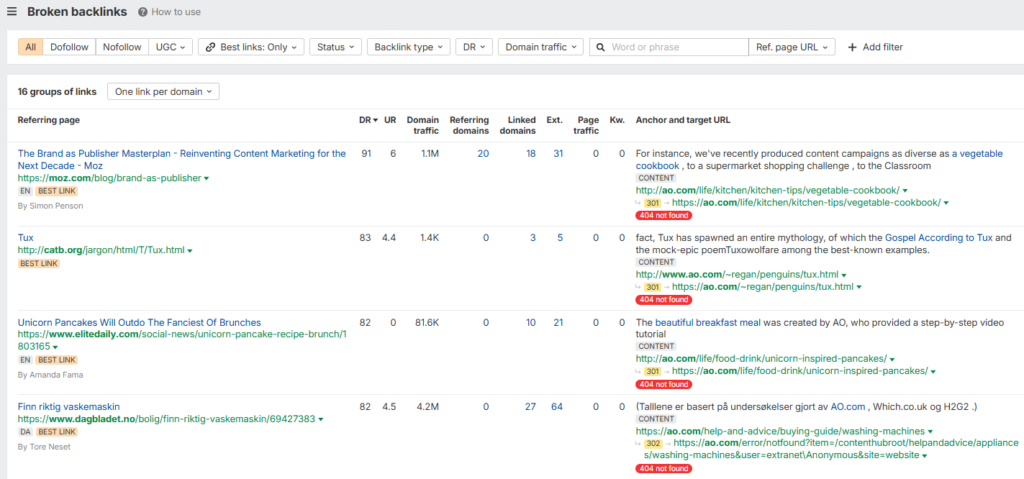
We fix this by:
- Redirecting old pages with backlinks to the closest relevant alternative
- Redirecting discontinued product URLs to related categories, not just the homepage
- Updating internal links to point to the final, canonical URLs
The result of this work is that authority flows to your best performing pages, helping them rank faster (and better).
4. Make key pages easier to find
Good technical SEO is really about giving Google clearer signals on what matters most.
For ecommerce websites, category pages are critical; they target high intent search terms and deserve internal support. As part of our SEO audits, we improve discoverability of these pages by:
- Linking from product pages back to key categories
- Aligning headings, metadata and copy with actual search demand
- Making each category page distinct
5. Improve page speed
Once your site is crawlable and indexable, page speed performance becomes the next focus. In ecommerce, speed isn’t just about SEO; it’s about conversions.
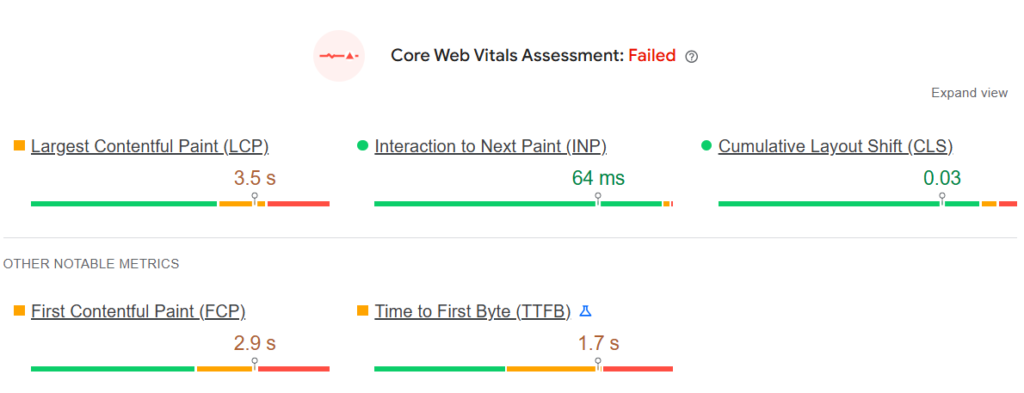
It’s important to focus on improvements that actually move the needle, such as:
- Deferring non-essential scripts
- Removing unused code
- Reducing render-blocking elements
- Compressing and lazy loading images
- Switching to next generation formats like WebP
Google has in fact warned that good performance alone doesn’t guarantee high rankings. It’s just one part of technical SEO. This is why high cost development interventions are usually not needed. Often, simply updating how images load can shave off seconds, with a bigger impact than heavier (and more costly) development work.
6. Create a clear roadmap
This is where a technical audit becomes a growth strategy. Instead of handing over a massive report, we deliver a prioritised action plan with clear commercial impact.
Not every technically sound recommendation makes commercial sense. An SEO audit has to reflect how the business really operates; things like stock turnover, product margins, seasonal demand, category performance and the resources available internally. A perfect fix that takes eight weeks to build is often worth less than a less-than-perfect solution you can roll out tomorrow.
We usually break priorities down like this:
High priority: Crawl issues, index cleanup, implementing critical redirects
Medium priority: Structural improvements, internal linking, on-page tweaks
Lower priority: Page speed improvements, UX fixes
We also weigh each action by impact versus effort. For example, page speeds might be less than optimum (according to Page Speed Insights) but not cause any issues for customers. Fixing them might involve huge development work or even migrating to a new platform . In cases like this, the impact is low and the effort is high, meaning that it becomes a much lower priority action.
Solid technical SEO doesn’t mean fixing everything. It means fixing the right things in the right order.
When done right, your site becomes faster, easier to navigate and better understood by Google. This, in turn, means better rankings, more traffic and more revenue.

Klaudia Majewska
Klaudia Majewska is an SEO Account Manager responsible for planning, executing and reporting on SEO campaigns across a range of clients. Her work focuses on turning strategy into consistent, measurable performance through clear priorities and ongoing optimisation. Klaudia has a strong technical SEO background and works closely with emerging AI-led search formats. She specialises in making sure products and services are structured and presented in ways that perform across both traditional search results and newer AI-driven search experiences.
Is your ecommerce SEO work focused on what matters?
Prioritised technical fixes that help turn traffic into revenue.
Ecommerce SEO audits are only useful when the right fixes get made. We help identify and resolve technical SEO issues that affect your products, categories and key landing pages, from crawl problems and index bloat to broken links, redirects and site speed.
Fix What's Holding You Back